by Judah | May 29, 2025 | Email Marketing & Automation, Lead Generation & Nurturing, SEO & Online Visibility, Small Business Growth, Web Design & Development
Building a website without a growth plan is like hitting the road on a family trip with your kids with: no snacks, no entertainment, no mobile data, and of course, the check engine light flicks on halfway through hour one. You’ll get somewhere… but not without chaos, complaints, and maybe a little emotional damage.
So, What Is a Website Growth Plan?
A website growth plan is a strategic roadmap designed to grow your online presence and generate leads. It goes beyond “make it look good” and into “make it work hard.” It combines content, SEO, lead capture, email marketing, and more to align your website with your business goals (Note: If these terms are a little foreign to you, visit the Marketing & Website Terms Made Simple page).
Think of it as what Walter White was to Breaking Bad, methodical, precise, a little gritty, and highly calculated (minus the moral decay).
Here’s what a typical website growth plan might include:
-
Location-Specific SEO Pages: These help you show up when someone types “[your service] near me” and doesn’t want to scroll past Yelp.
-
Keyword Research & Organic SEO: Instead of guessing what your customers search for, we research it and bake those terms right into your content.
-
Strategic FAQs: Because if people keep asking, your site should be answering.
-
Content Marketing via Blogs: Useful, helpful, and optimized for search engines.
-
Lead Magnets: Irresistible downloads or freebies that get visitors to say, “Yeah, I’ll trade my email for that.”
-
Email Follow-Up Series: Think of this as the nurturing sequence that gently guides leads toward working with you.
-
Monthly E-Newsletter: Ongoing education that keeps your brand top of mind and helps potential customers without being pushy.
Learn more about what is included in our Website Growth plans.
Why I’m Building My Own Growth Plan (and What I’ve Learned)
After a corporate downsizing, I took my 10+ years of experience in corporate marketing and stepped into building my own business. I thought my freelance website was a head start, but I quickly realized I had to go deeper and create something that truly aligned with my goals and the audience I wanted to reach.
I’m currently developing that strategy, creating content, crafting lead magnets, planning email series, and writing blogs just like this one to support other small businesses navigating the same waters.
This isn’t just theory. It’s the very approach I’m using to grow Dynamic Spark, and it’s the kind of strategy I can help you implement too.
What Happens If You Don’t Have a Website Growth Plan?
You might still have a website that looks decent. You might get a few inquiries. But you’re probably also:
-
Missing out on search traffic.
-
Not capturing leads.
-
Wasting time with dead-end marketing.
-
Feeling like you’re throwing digital spaghetti at the wall to see what sticks.
That’s where a strategy saves you.
Your website should be working around the clock to get results. But without the right intel, it’s just shouting into the void while the real action happens somewhere else. In short: it starts doing what you actually built it for.
Ready to Build Your Growth Plan?
If your website is coasting and you’re ready for it to start pulling its weight, let’s get moving. Start by filling out this quick questionnaire and let’s figure out how to make your site do more than just sit there looking pretty.
Fill out the Website Questionnaire
It’s fast. It’s strategic. And it’s one step closer to clarity.

by Judah | Mar 26, 2025 | Digital Marketing Strategies, Lead Generation & Nurturing, SEO & Online Visibility, Small Business Growth, Web Design & Development, Website Maintenance & Optimization
So, you’re thinking about building your own website. How hard can it be? It’s like cutting your own hair—you can do it, but you might not want to show anyone the results.
DIY website builders promise you’ll have a site up in minutes. Just drag, drop, and poof—you’re the next digital entrepreneur. But here’s the problem: looking “done” and looking professional are two very different things.
Meanwhile, a professionally designed website isn’t just there to look pretty. It’s a 24/7 sales rep, working to convert visitors into customers while you sleep. So, let’s break down the real difference between a DIY site and one built by someone who actually knows what they’re doing.
1. First Impressions: Is Your Website Scaring Away Customers?
Your website has about 3 seconds to impress visitors before they leave faster than a cat avoiding bath time.
DIY Website Struggles:
❌ Generic templates that make your site blend into a sea of mediocrity
❌ Confusing layouts where visitors have no clue where to click
❌ Font choices that scream “designed by my cousin who took a graphic design class in 2008.”
What a Pro Designer Does:
✔ Creates a custom, on-brand design that makes you look legit
✔ Optimizes layout and visuals to keep visitors engaged
✔ Designs for mobile first (because over 60% of your traffic is coming from phones)
The Hidden Cost of DIY Websites: If your site looks unprofessional, people assume your business is, too. That means lost trust, lost credibility, and lost sales.
2. SEO: Can Google Even Find Your Site, Bro?
If your website exists but isn’t ranking on Google, does it even exist?
DIY SEO Nightmares:
🔍 Slow loading speeds—Google hates slow sites, and so does everyone else
🔍 No keyword strategy—just hoping people “stumble upon” your site
🔍 No mobile optimization—Fun fact: Google ranks mobile-friendly sites higher
What a Pro Designer Does:
✔ Improves page speed so visitors (and Google) stick around
✔ Optimizes for the right keywords so you actually show up in search results
✔ Builds a mobile-first site to help improve user-experience
Hidden Cost of DIY: If Google doesn’t rank your site, your competitors are stealing your traffic.
3. User Experience: Is Your Site Annoying People?
Nothing says untrustworthy business like a broken contact form or a checkout page that mysteriously deletes everything right before purchase.
DIY Website Fails:
🤦 Links that go nowhere or worse, to an error page
🤦 No clear call-to-action so visitors leave without taking action
🤦 Navigation so confusing that users need a map and compass
What a Pro Designer Does:
✔ Ensures everything actually works (crazy concept, right?)
✔ Guides visitors toward taking action (like booking a call or buying a product)
✔ Makes navigation smooth & intuitive (so people don’t rage-quit)
Hidden Cost of DIY: If users can’t easily navigate your site, they’ll leave. And guess what? They’re not coming back.
4. Security & Maintenance: Hackers Love DIY Websites
Think hackers only go after big companies? False. Small business websites get hacked every day because they often lack basic security.
DIY Website Weaknesses:
🔓 No regular updates or security patches
🔓 Weak protection against malware and cyberattacks
🔓 No backups—so if something breaks, good luck
What a Pro Designer Does:
✔ Sets up proper security measures to keep your site safe
✔ Monitors & updates regularly with a Website Support Plan so you don’t have to
✔ Ensures your site gets backed up—because disasters happen
Hidden Cost of DIY: If your site gets hacked, you could lose business, credibility, and SEO rankings overnight.
5. Lead Generation: Is Your Website Just Sitting There?
Your website shouldn’t just sit around looking pretty—it should be bringing in leads and sales.
DIY Lead Gen Fails:
❌ No clear call to action—so visitors leave without converting
❌ No trust-building elements—so visitors lack reassurance you’re legit
❌ No lead capture system—so you’re missing out on potential customers
What a Pro Designer Does:
✔ Creates clear, action-driven pages that turn visitors into buyers
✔ Uses social proof & credibility markers like testimonials and case studies
✔ Builds in lead capture tools to grow your email list & customer base
Hidden Cost of DIY: If your website isn’t converting visitors, you’re leaving money on the table.
The Real Cost of a DIY Website vs. a Professional Site
Let’s break it down:
💻 DIY Website:
✔ Cheaper upfront (woohoo!)
✔ You get full control (even if you don’t know what you’re doing)
❌ Looks generic
❌ Ranks poorly on Google
❌ Frustrates visitors (who leave without buying)
❌ Vulnerable to security risks
❌ Ends up costing you more in lost sales
🚀 Professional Website:
❌ Costs more upfront
❌ Limited control on how to build or make changes
✔ Designed to convert visitors into customers
✔ SEO-friendly (so people actually find you)
✔ Loads fast, works seamlessly, and builds trust
✔ Saves you time, stress, and lost revenue
✔ Is an investment in your business growth
The Verdict: DIY or Pro?
You can build your own website—just like you can fix your own plumbing. But when your DIY project ends up costing you more time, money, and customers… was it really worth it?
If you’re ready to invest in a website that actually works, let’s talk.
Contact us today!
Or… you could spend the next three weekends Googling “why does my website look weird on mobile?”
Your call. 😉
by Judah | Feb 19, 2025 | Digital Marketing Strategies, Lead Generation & Nurturing, Small Business Growth, StoryBrand Marketing Framework
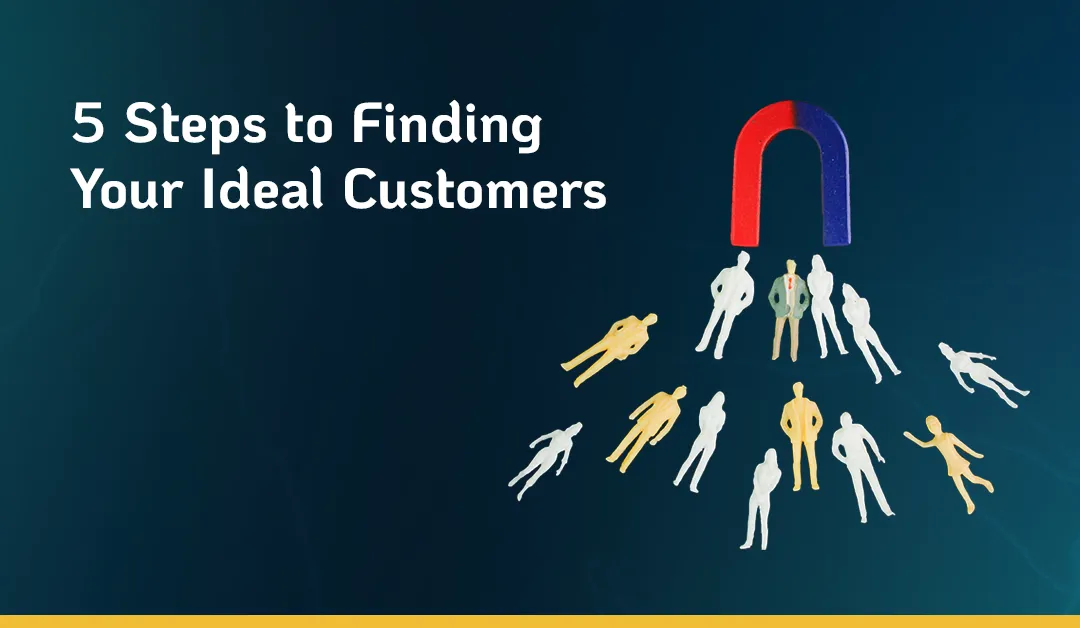
Have you ever felt like you’re marketing to everyone but selling to no one? You’re not alone. Many businesses fall into the trap of casting a wide net, hoping to catch anyone with a pulse and a wallet. But here’s the truth: not all customers are created equal. Some will love you, some will ghost you, and some will make you question your life choices.
That’s where the 80/20 principle comes in. It tells us that 20% of your customers drive 80% of your revenue. That means a large chunk of your clientele may be draining your time and energy without giving much in return. So, instead of chasing the wrong crowd, let’s zero in on those golden customers who truly value what you bring to the table.
Here’s how you do it in five steps:
Step 1: Identify Your Ideal Customer (a.k.a. Your Business Soulmate)
Before you go looking for your dream clients, you need to know what they look like. Think of it like online dating—would you rather swipe right on everyone or focus on the people who actually share your interests? (No judgment if you’re into the chaos of random matches.)
Start by listing characteristics that make someone an ideal client or what may be red flag—those nightmare clients you want to avoid. Here are some of mine.
Traits of an Ideal Customer
✔ Has a clear vision but needs expert help to execute it
✔ Wants to grow and values expertise
✔ Looking for a collaborative partnership
✔ Values quality over the cheapest option
✔ Understands that marketing is an investment, not an expense
✔ Respects your time and expertise
Red Flags to Avoid
✔ Only focused on price, not long-term value
✔ Micromanages every detail and ignores expert advice
✔ Disrespects time and lacks patience
✔ Expects overnight results
By knowing who you want and who you don’t, you’ll save yourself endless headaches.
Step 2: Categorize Your Ideal Customers (Because Not All Heroes Wear Capes)
Your best clients likely fall into different personas. Here are a few types I choose to focus on for my business.
Dynamic Spark Customer Personas
- The Overwhelmed Business Owner – Wears too many hats, desperately needs marketing help, but doesn’t know where to start.
- The Growth-Minded Leader – Understands marketing’s ROI and is ready to invest in scaling their business.
- The Visionary Entrepreneur – Has big ideas and wants a brand that reflects their high standards and uniqueness.
By categorizing your customers, you can tailor your messaging and services to better meet their specific needs.
Step 3: Attract Them with a Lead Magnet (and a Dedicated Landing Page)
Now that you know who you’re looking for, you need a way to attract them. Enter the Lead Magnet—a free resource that provides value in exchange for their contact info.
Example Lead Magnet: “Small Business Marketing Survival Guide”
Mine includes:
✔ A step-by-step guide to prioritizing marketing tasks
✔ A checklist of website and branding must-haves
✔ Time-saving marketing automation tips
✔ Common small business marketing mistakes (and how to fix them)
But here’s where many businesses go wrong: They don’t create a dedicated landing page.
Why a Landing Page Matters
A landing page is laser-focused on one goal—getting the visitor to sign up for your Lead Magnet. No distractions, no competing calls to action, just a clear message about the value they’ll get. Here’s why it’s essential:
✔ Increases conversions—A single, focused page converts better than a generic website page
✔ Improves ad performance—When paired with targeted social media or Google Ads
✔ Makes tracking easier—So you can see exactly how well your lead magnet is performing
✔ Enhances credibility—A professional landing page signals that you’re serious about your business
Step 4: Nurture Your Leads (Because Nobody Likes a Pushy Salesperson)
Once someone downloads your Lead Magnet, don’t leave them hanging. A well-crafted lead nurture sequence can turn a curious visitor into a loyal client.
A Simple Lead Nurture Email Sequence
- Deliver the lead magnet—Immediate value = good first impression
- Define Your Purpose—Share your story and why you’re passionate about helping businesses grow.
- Identify a Common Problem + Offer a Solution—Show how your services can eliminate their biggest struggles.
- Customer Testimonial—Nothing builds trust like proof from happy clients.
- Paradigm Shift—Address past frustrations they may have had with similar services and show how you’re different.
- The Offer—Now’s the time to present your solution and invite them to take the next step.
By warming up your leads, you turn potential clients into paying clients without resorting to spammy tactics.
Step 5: Get the Word Out (a.k.a. Smart Advertising)
Now that everything is in place, you need to get eyeballs on your lead magnet.
Traffic Strategies for Lead Magnets
✔ Run targeted ads on Google and social media, using your defined customer personas
✔ Leverage organic marketing through social media posts, blog content, SEO
✔ Utilize partnerships by collaborate with complementary businesses for cross-promotion
✔ Place it on your website with strategic call-to-actions throughout
The goal? Get the right people to see your lead magnet, sign up, and enter your nurture sequence. Done right, this creates a self-sustaining cycle of attracting, engaging, and converting ideal customers.
Final Thoughts: Are You Attracting the Right Customers?
If your marketing feels like a game of chance, it’s time to get strategic. By identifying, attracting, and nurturing the right leads, you’ll build a business with clients who value what you do—instead of wasting energy on the wrong ones.
🔹 Want to see this in action? Download my lead magnet and experience the process firsthand!
🔹 Ready to refine your strategy? Let’s chat—schedule a consultation today.
Your ideal customers are out there—you just need the right strategy to find them!
by Judah | Jan 8, 2025 | Marketing, Personal
How did I end up starting a marketing consulting business? Great question! But before I dive into my career journey, let me ask you this: Do you love what you do? Why do you do what you do? These are the very questions I ask my clients when learning about their businesses. Each story is unique, and every path has its own twists and turns—just like mine.
Cue Lady Gaga: “Cause God makes no mistakes, I’m on the right track, baby, I was born this way.”
How does that resonate with me? Marketing has been a part of me since I was a kid. Let’s rewind to the late ‘80s, when selling wrapping paper was a thing. Oh, I dominated in personal sales. A family friend still has wrapping paper I sold nearly 35 years ago! You’d think this entrepreneurial streak would’ve launched an illustrious sales career, right? Wrong. I quickly realized I didn’t enjoy the high rejection rates of one-to-one sales, but that spark for business and personal connection never left me.
Art, Business, and High School Revelations
Growing up, I was always creating. Drawing, designing—you name it. By the time I got to high school at Madison East, my artistic side blossomed in various art classes. I loved exploring creativity and seeing how my designs came to life.
Choosing a Practical Path
As graduation approached, a false sense of reality hit:
Artists are “supposed to be” broke.
That narrative took hold and prompted me to explore a more “practical” career in business. Enter Mrs. Andersen’s “Starting a Small Business” class, which sparked my interest in the business world and entrepreneurship. For the first time, I saw how creativity could intersect with strategy to build something meaningful.
Discovering My Passion for Marketing in College
I went off to UW-Whitewater, a college known for its business programs. Initially, I spent more time “networking” at parties than studying. My GPA reflected this, but joining the American Marketing Association (AMA) introduced me to a world of marketing. I was hooked.
“Where’s the beef?”
Suddenly, I was brimming with movie quotes and catch phrases that fueled my creative fire and brought marketing to life.
Unfortunately, my frequent “networking” led to a GPA that delayed my entry into the School of Business, so I explored Advertising classes to boost my grades. Not only did it work, but I found more fuel for my passion! Shoutout to Professor Zhou for drilling into my head that “Marketing is my… (dramatic pause)… passion!” I ended up double majoring in Journalism and Marketing, capitalizing on my love for communication, strategy, and creative storytelling.
Pivots, Car Rentals, and Coaching Volleyball
An Unexpected Detour in Car Rentals
Post-college, I never landed my dream marketing or advertising agency job. Instead, I found myself cleaning rental cars at the airport and coaching varsity volleyball at Abundant Life Christian School.
Sometimes, life calls for a (Friend’s fans chime in here) PIVOT!
While cleaning rental cars wasn’t glamorous, it taught me valuable lessons about patience and adaptability.
Finding Fulfillment in Coaching
Coaching, on the other hand, fulfilled a different passion:
Mentoring and inspiring young people.
I discovered that guiding others to succeed, whether in sports or business, was deeply rewarding.
Luckily, this was a short detour. A college connection (shoutout to Kim!) referred me to a market research position in Chicago.
Lesson learned:
Who you know can be just as important as what you know.
Kim’s hard work and academic achievements rewarded my “networking.” The role opened doors and gave me experience in analyzing data and understanding consumer behavior. Two years later, though, I felt creatively unfulfilled. A housing crisis and subsequent layoff gave me a chance to reassess my direction.
Back to School–Rediscovering My Creative Side
Pursuing Graphic and Web Design
Deciding to reignite my creative side, I pursued a Graphic Design associate degree at Madison College. This wasn’t just about learning—it was about rediscovering the joy of creating something from nothing. Later, I added a Web Design certificate, which combined my love of visuals with problem-solving and strategy. This technical path sparked my love for blending art and technology, though never with Comic Sans or Papyrus fonts. (Thanks, Mike Martin, for keeping design standards high!)
New Skills, New Opportunities
These new skills opened up a world of possibilities. I started designing logos, building websites, and experimenting with different marketing techniques. Each project felt like another piece of the puzzle falling into place.
Designing, Marketing, and Winning ADDYs
My 10-Year+ Journey at WPS Health Solutions
Fast forward to landing a web designer role at WPS Health Solutions. In the 10+ years I was there, I wore many hats:
- Web designer
- Graphic designer
- Email marketing strategist
I even won a Silver ADDY Award for my work. Email marketing became a niche where I thrived, thanks to email marketing guru Jay Schwedelson’s strategies. Crafting campaigns that connected with audiences and drove results was exhilarating.
When a company-wide restructuring led to yet another career reassessment, I realized something important:
Marketing is still my passion.
Every step in my journey—every pivot and challenge—had led me to this point. Why not make it official? Enter: Dynamic Spark.
Present Day: Sparking Growth with Dynamic Spark
Since launching Dynamic Spark, I’ve been working with clients to help spark growth in their small-to medium-sized businesses by building custom websites that capture their brand’s unique vision so they can:
- Attract their ideal customers
- Turn website visitors into loyal advocates.
My Core Service Offerings
Custom Websites
Helping businesses create professional, high-performing websites.
Branding and Logos
Crafting unique, memorable branding that stands out.
Marketing Strategy
Developing tailored marketing plans for growth.
Website Growth Services
-
Email Marketing
-
SEO Optimization
-
Lead Magnet Development
-
Landing Page Design
View Website Growth Services options.
Why I Do This
Why? Because I believe every business has a spark waiting to ignite. I’m passionate about helping business owners uncover their unique stories and use them to connect with their audience. Whether you’re a small business owner in the greater Madison, WiI area or a local service provider, your story matters. You matter. And why you do it is the key.
Let’s Spark Something Great Together
So, what’s your journey? Let’s spark something great together. Learn more and get started today! Even if we’re not a fit, I’ll gladly refer you to someone in my network. Dynamic Spark is here to light up your business. Together, we can create something truly remarkable.