A Leap of Faith, When Letting Go Makes Room for Provision

A Leap of Faith, When Letting Go Makes Room for Provision

Sometimes the hardest step is loosening your grip

For the last season of my life, my biggest concern was simple and heavy at the same time, consistency in income.

Six months ago, success meant helping clients succeed, finding more clients, building recurring revenue, and keeping Dynamic Spark moving forward. I was doing meaningful work, work I cared deeply about, but the stress of inconsistency sat quietly in the background, always present.

Today, success looks different.

It looks like being happy with the work I’m doing.
It looks like less stress about income.
It looks like peace with working for an individual business again.

That shift did not happen overnight, and it definitely did not happen according to my plan.

Choosing faith before the math worked

One of the clearest faith moments in this journey had nothing to do with work.

I proposed to my girlfriend of four years during a season when income felt anything but stable. From a purely logical standpoint, it did not make sense. But after conversations with a spiritual leader, prayer, and consistent confirmation through Scripture and daily devotionals, it became clear that faith was asking me to value the future more than the present.

That decision set the tone for everything that followed.

Shortly after, a part-time position kept showing up on my radar. At first, I resisted it. It felt like a distraction from the business I was trying to grow. But the more I prayed for provision, the more I realized something uncomfortable, if I was asking God to provide but unwilling to take a step when an opportunity appeared, I was closing the door myself.

So I applied.

When a step is not the destination

That step required letting go of some control, time, and pride. The role itself was never the destination, but it softened my grip and widened my perspective. Going through the process gave me permission to imagine a different rhythm of work and life, one that did not revolve entirely around carrying everything on my own.

Through interviews and conversations, I caught glimpses of a healthy culture and what it could look like to be part of a team again. It reminded me that while remote work has served me well, I have spent a significant portion of my career behind a screen. I thrive on real connection, and even recognizing that longing helped me loosen my hold on what I thought I needed to protect.

That openness mattered. Without it, I would not have been willing to consider what came next.

Around the same time, a new client opportunity experienced a delay. Another reminder that even my best plans were still fragile.

And that is when a different door opened.

The role of friendship and timing

My friend Tommy reached out to see if I would be open to learning more about working with Patio Pleasures in a marketing role.

Tommy and I go back to college at UW–Whitewater. We’ve stayed in contact over the years and have been in the same fantasy football league for more years than I’d like to admit. He knows me well enough to recognize not just a skills fit, but a values and personality fit.

What mattered most was that he advocated for me before I ever stepped into the building. He helped leadership see the value of having marketing in-house and had me in mind as someone who would align with the culture they were intentionally building. I’m deeply grateful for the role he played in making this career change.

Even then, I didn’t rush into it. It took me until the next day to have peace about learning more about the business. But once I visited the store, heard about the company, and spent over an hour talking with his manager, something felt different.

There was no pressure. No pitch. Just conversation.

The more I learned, the more everything lined up. The people. The culture. The integrity. The way they view marketing as education and relationship, not noise or manipulation. Without realizing it, I was describing how I have always believed marketing should work, and they were nodding because that is how they already operate.

That alignment felt like confirmation.

Why this chapter makes sense

Accepting the Marketing Manager role at Patio Pleasures came with mixed emotions.

There is real excitement about the work ahead and the opportunity to enhance an already strong foundation. There is peace knowing income will be consistent. And there is also some grief in putting Dynamic Spark on hold, at least for now.

Dynamic Spark has shaped me deeply. It taught me that I love people and thrive on authentic interaction. It taught me grit, how to finish projects when there are no clear answers, and how growth often requires doing uncomfortable things first. Networking, presenting, and talking to strangers all felt awkward early on. With practice, they became formative.

Putting this work on pause does not erase those lessons. If anything, it builds on them.

At Patio Pleasures, I get to focus fully on marketing. I get to work within an established business that already has a strong base, adding clarity, personality, and one-to-one connection to what is already working. I get to test ideas, help shape execution, provide consistency, and work alongside a team that trusts me to make decisions.

I’ll also be stepping back into an in-person environment for the first time in a long while. I’m looking forward to the connection, even as I acknowledge some natural discomfort in the transition. Growth often carries both.

What I am learning through all of this

This season has reinforced something I am still learning to live out.

Faith requires action. Faith without action isn’t faith at all.

Sometimes God does not provide far in advance. He provides at the moment of need. That means control often has to be released before clarity shows up. Leaps of faith can feel ill-timed or uncomfortable, but they can also lead you exactly where you are meant to be.

This chapter is not about walking away from something. It is about walking toward peace, alignment, and growth.

If this season has taught me anything, it is that control often feels safe, but surrender creates space.

If you are holding tightly to something because letting go feels risky, maybe the question is not what you might lose, but what you are not allowing room for yet.

What would change if you loosened your grip just enough to take the next step, even without seeing the whole path?


Should Your Business Jump on Every Marketing Trend?

Should Your Business Jump on Every Marketing Trend?

If you are like me and have kids in elementary and middle school, you’ve been hearing the constant repeating of the numbers, “6-7”. Every generation has its thing. For my kids, it’s “6-7.” For me growing up, it was quoting movie lines from Tommy Boy or Happy Gilmore. But now, my kids have turned this nonsense number game into an art form. I can’t even say the number six without them firing back with “seven” and the hand gesture that goes with it. It is so cool and funny when my 10 and 12 yr old do it, but whenever I subtly mix it in to conversation, I get this blank stare from my daughter as if to say, “No, Dad, not cool.”

6-7 gif

It’s gotten to a point where I’ve thought, do I embrace and capitalize on this trend by creating some fun and interesting “6-7” t-shirts?

The same impulse that drives kids to repeat viral memes is tempting business owners to jump on every marketing fad. I’ve caught myself doing it: chasing AI for AI’s sake, launching that hot new platform, or copying what someone else’s brand is doing. And it usually backfires.

So how do you spot which marketing trends are worth your time and which ones are just shiny distractions?

The Temptation of Trends

It’s easy to feel like you’re falling behind if you’re not experimenting with every new marketing tool. In fact, Semrush reports that 67% of marketers say they currently use AI for content marketing or SEO (pretty relevant statistic 😊). And according to HubSpot’s 2025 Marketing Trends data, AI tools for content creation and workflow automation are top investments.

But most small businesses don’t have the people, budget, or brand clarity to adopt every trend meaningfully. Blindly chasing fads can distort your budget, distract your team, and dilute your brand. That “must-do” trend might cost you much more than it returns.

When Chasing Trends Costs You Your Brand

Brand consistency matters. According to branding research by Fit Small Business, consistent branding across channels can increase revenue by up to 20%. If your business is switching voices, visuals, and platforms every few months chasing what’s new, you lose memorability.

Imagine your brand as a signature style; something people recognize instantly. If you keep overlaying every new trend, you lose your edge. Your brand becomes bland. When everyone’s chasing the same shiny thing, no one stands out.

Marketing Trends Worth Watching 

Let’s call out a few trends that are worth considering, but only if they fit your business:

  • AI-assisted content & automation — Marketers increasingly use AI tools to scale content creation and optimize workflows. CMSWire.com
  • Visual storytelling & video-first content — Short-form video continues to dominate engagement. CMSWire.com
  • Answer Engine Optimization (AEO) / generative search answers — Search engines are delivering answers, not just links. Some queries never result in a website click anymore. TechRadar
    These trends are valid. But they should amplify your brand, not hijack it.

How to Evaluate a Trend Before You Dive In

Before you pour time or money into something new, run it through this Trend Test Checklist:
Audience fit: Will this trend help reach your actual customers — not just impress marketers?
Measurement clarity: Can you tie it back to leads, awareness, or conversions?
Brand alignment: Does this trend blend with your brand voice, or does it force you to act like someone else?
Data signals: Use Google Trends, analyze competitor adoption, and review preliminary metrics before full rollout.
Complement vs. distract: Will this support your core marketing or steal resources from your foundational channels?

What to Do Instead

Stop chasing every bright new thing. Start with clarity:

  • Define your brand story and positioning
  • Invest in a website or audit that shows what’s working and what’s not
  • Build foundational tools (email, FAQs, content pillars) before layering in trends
  • Use trends as strategic amplifiers, not substitutes

The most lasting marketing trends? Consistency. Repetition. Authentic voice.

FAQs

How do I know if a marketing trend fits my business?

Start by asking one simple question: Would this trend help me reach and serve my ideal customer better? If the answer is “I’m not sure,” it’s worth pausing. Use a quick test before diving in:

  • Audience Fit: Does your audience use this platform or format?

  • Brand Alignment: Does it reflect your voice and values, or does it make you sound like everyone else?

  • Sustainability: Can you realistically maintain it for 6+ months without stretching your team thin? Trends should amplify what’s already working, not replace it. If it feels like a full pivot, it’s probably a distraction.

What happens when businesses chase too many marketing trends at once?

Think of your marketing like compound interest — it grows through consistent deposits. Jumping between trends resets your momentum every time. The fallout usually looks like this:

  • Inconsistent messaging: Customers can’t tell who you are or what you stand for.

  • Scattered focus: Your time and money get split across half-baked efforts.

  • Weaker trust: Audiences start tuning you out because nothing feels steady.

The cure isn’t to avoid trends completely, but to build a solid foundation (website, email, SEO) first, then layer trends that support your story.

What marketing trends in 2025 are worth paying attention to?

Not all trends are gimmicks. Some represent real shifts in how people find and engage with brands. A few to watch include:

  • AI-assisted content creation and automation: Helpful for efficiency, but it only works when you personalize it with human insight.

  • Video-first storytelling: Short-form video remains powerful for connection, especially if you show your process or people behind the brand.

  • Generative search and AEO (Answer Engine Optimization): Search engines are giving users direct answers now, so your content needs clear, conversational phrasing that matches what people ask.

The key is to adopt strategically, not reactively. Every trend should pass your “brand filter” first.

How can I stay up to date with trends while keeping my marketing consistent?

Consistency isn’t the enemy of creativity; it’s the framework that makes creativity believable. To stay consistent:

  1. Document your brand voice — What you sound like, what you don’t, and your core story.
  2. Create content pillars — 3–5 key themes you talk about regularly.
  3. Batch plan — Dedicate specific weeks or campaigns for trend testing rather than reacting weekly.
  4. Review quarterly — Look at data, audience feedback, and performance before deciding what to keep.

When you have a clear rhythm, trends become tools you can plug in, not disruptions you chase.

How can a website audit and strategy call help me choose the right marketing trends?

A website audit gives you a clear picture of how your current marketing is performing — things like SEO health, site speed, messaging clarity, and conversion flow. Pairing that with a strategy call turns insight into action. Together, we’ll:

  • Identify which channels or trends are driving your traffic and leads.

  • Uncover where your messaging or brand story might be confusing visitors.

  • Find opportunities to improve SEO so your website shows up better in search results.

  • Map out practical next steps based on data, not hype. 

It’s the difference between guessing what works and knowing what works. For most small businesses, that clarity alone is worth more than any hot new marketing trick.

    Want Clarity Before Chasing the Next Fad?

    If you’re tired of trying every new marketing gimmick without seeing real results, start with clarity.

    I’m offering a free Website Audit to help you see what’s working, what’s not, and where your site might be holding you back.

    From there, you can book a discounted Strategy Call (for a limited time) where we’ll walk through your results, uncover growth opportunities, and outline a focused next step for your business.

    No fluff. No pressure. Just clear insights and a plan you can trust.

    Why Your Website is Your Volleyball Club’s Best Recruiting Tool

    Why Your Website is Your Volleyball Club’s Best Recruiting Tool

    A Parent’s Frustration Turned Into a Passion

    When my daughter first told me she wanted to play club volleyball, I thought finding the right club would be simple. I’d been around volleyball my whole life, playing through high school, competing for three years in college, and even coaching for a season.

    Her interest in volleyball really took off after watching the University of Wisconsin women’s volleyball team win the national championship. She was eager to play, and I was excited to help her start.

    But as a parent, searching for a club was harder than I expected. Many club websites didn’t have enough information to help me compare programs. I struggled to find basic details like schedules, costs, and levels of commitment. Eventually, I signed her up for a club mostly based on location. I didn’t understand how team offers worked and missed the response window for her placement, which shaped her entire first season.

    Even after coaching club for a year, I found myself asking the same questions other parents were asking me. If I was still confused, I knew parents who were brand new to the club world must be feeling the same frustration.

    That’s when I realized volleyball clubs have an opportunity. Parents weren’t frustrated with the programs themselves, they were frustrated because they couldn’t get the details they needed to make informed decisions.

    With over a decade of experience in marketing and website design, I decided to start Dynamic Spark to help clubs communicate better, save time, and attract the right athletes and families.

    Why Websites Matter More Than You Think

    Many club directors see their websites as just one of the tools they need to manage their club, but often they aren’t sure how to use them effectively. But your website is more than a digital brochure. It’s your 24/7 recruiter, communications hub, and first impression.

    When a parent searches “volleyball club near me,” they aren’t just looking for dates and pricing. They are evaluating your professionalism, organization, and values. A polished, easy-to-navigate website builds trust before you ever talk to them. A confusing or outdated site, even if your program is outstanding, can unintentionally send the wrong message.

    Parents are also making comparisons. When a club’s website is informative and easy to navigate, it naturally builds credibility. Your website is often the deciding factor in whether a parent reaches out or moves on.

    According to a BusinessDasher’s 42+ Statistics About Websites Businesses Must Know for 2024, 75% of users judge a company’s credibility based on its website design. That means parents are forming opinions about your club within seconds of landing on your site.

    Many directors worry about investing in a better site because it feels like another task on an already long to-do list. Others wonder if the expense is worth the investment, or they aren’t fully aware of technical issues that may be holding their site back from showing up in search results or competing with other clubs in the area. But your website is the one tool that works around the clock. It’s where families start their journey, and it’s often where they decide whether your club feels like the right fit.

    A Strategic Approach to Volleyball Club Websites

    The good news is, you don’t need a massive overhaul to see a big difference. By focusing on clarity, organization, and trust, your club can stand out without overwhelming you or your budget. Below are essentials every volleyball club website needs to educate parents, save time, and help you recruit the athletes who are the best fit for your program.

    Essentials Every Volleyball Club Website Needs

    1. Your Club’s “Why” Front and Center
      Parents want to know what your club stands for. Beyond logistics, what’s your philosophy? Why should they trust your program to invest in their child’s growth? Sharing your story, values, and coaching approach creates a connection.
    2. Clear Program and Tryout Information
      Parents should know exactly what their athletes are trying out for, what teams or levels you offer, and what the season commitment looks like. Include details about practice schedules, season length, and tournament participation.
    3. Practice and Competition Schedules
      It’s not just about practices. Families need to plan ahead, so sharing competition dates or at least a clear timeframe is key. If you offer strength and conditioning or off-season training, list that too.
    4. Easy-to-Find Registration
      Whether it’s tryouts, clinics, or private lessons, registration should be a single click away from your homepage. Use buttons with clear labels like “Register Now” or “Tryout Info.”
    5. Coach Bios and Staff Information
      Parents want to know who will be working with their kids. Adding coach bios, experience, and even photos helps build trust and gives your club a personal touch.
    6. Visuals That Reflect Your Brand
      High-quality images of your athletes, events, and staff create a professional impression. Make sure all images are optimized for speed and include descriptive alt text for accessibility and SEO.
    7. FAQs to Save Time
      Think about the top 10 questions you get asked every season. How much does it cost? Where are practices? How do I know what team my athlete should try out for? Adding an FAQ section reduces back-and-forth communication and positions your club as organized and approachable.

    How a Good Website Saves You Hours

    A well-built volleyball club website is more than just a recruiting tool. It’s your communication hub that works around the clock. Parents can get answers to their questions, explore your programs, and decide if your club is the right fit before they ever send an email.

    Directors often spend hours responding to repetitive questions. A strategic site reduces the workload by proactively answering those questions. When parents are well-informed, they are more confident, and your staff can focus on coaching and operations rather than endless email threads.

    Think of your website as an investment in your time. A clear and organized site will free you up to focus on what matters most: growing your program and developing athletes.

    Common Pitfalls That Drive Parents Away

    Even small missteps on your website can push families toward another club. Here are a few to watch for:

    • Slow page load times due to oversized or rotating images

    • Confusing navigation that makes parents dig for basic details

    • Brief or missing information that forces families to send extra emails

    • Broken links or outdated pages that create doubt about your organization

    • Lack of trust-building elements like coach bios, testimonials, or program descriptions

    A simple audit of your site can reveal these issues quickly, and many fixes are inexpensive or free.

    Final Thoughts

    Parents are not just choosing a club. They are choosing a community for their child. Your website is often their first interaction with your program. By making it clear, accessible, and welcoming, you are already building trust and setting your club apart.

    Whether you choose to tackle these updates yourself or get expert support, a strong website is one of the most effective tools to grow your club. It is more than a digital brochure. It is your silent recruiter, your communications hub, and your 24/7 representative.

    Free Resource for Volleyball Club Directors

    Volleyball Playbook Resource For Website Enhancements

    If you’d like practical tips you can apply right away, I’ve created a free guide: From Clicks to Commits: The Volleyball Club Website Playbook. 

    This playbook includes short, actionable steps to help your website:

    • Clearly communicate who you are and what you offer

    • Show up in search results when parents are researching clubs

    • Build credibility and trust with families deciding where to commit

    • Highlight what makes your club different from the rest

    It’s built specifically for volleyball clubs, and it’s completely free.

    Take the next step today and grab your copy of the playbook. It might be the easiest win you make for your club this season.

    What a Weekend in Community Taught Me About Business Growth

    What a Weekend in Community Taught Me About Business Growth

    Why You Need Community to Grow a Business (No, Really)

    There’s this idea that to build a successful business, you need to hustle hard, stay quiet about your “secret sauce,” and view anyone in a similar space as your competition. But after spending a weekend at the first-ever Web Designer Pro in-person conference, I can tell you: that mindset couldn’t be further from the truth.

    This wasn’t just a business trip. It was a reminder of why I got into this work in the first place, and why community, collaboration, and shared experiences are essential ingredients for long-term success.

    From Virtual Chats to Real-Life Conversations

    I’ve been part of the Web Designer Pro community since last fall. It’s an online group built around helping web designers grow their businesses with purpose and clarity through regular trainings, Q&As, and group calls. The support is real, and the people in this group? They’re from all over the world, but many of us are working through very similar challenges.

    Each week, we meet virtually, asking questions, reviewing websites, and sharing wins and pain points. It’s been one of the most consistent sources of encouragement and accountability in my business journey.

    When I first found out about the group through Josh Hall’s podcast (which I discovered via Shannon Mattern’s podcast, who was also a presenter at the conference), I was already consuming every bit of marketing and business strategy content I could get my hands on. But eventually, I realized I didn’t just need knowledge. I needed connection.

    What the Conference Was All About

    Earlier this May, I attended the first in-person Web Designer Pro conference in Columbus, Ohio. And while I had chatted with many of the attendees virtually for months, this was our first time in the same room.

    The weekend kicked off with a meetup at a Columbus Clippers game. Yes, it rained the entire time, but I was so caught up in the conversations and meeting people in real life that I didn’t even notice. We had a dry, covered box and a full evening of uninterrupted community-building.

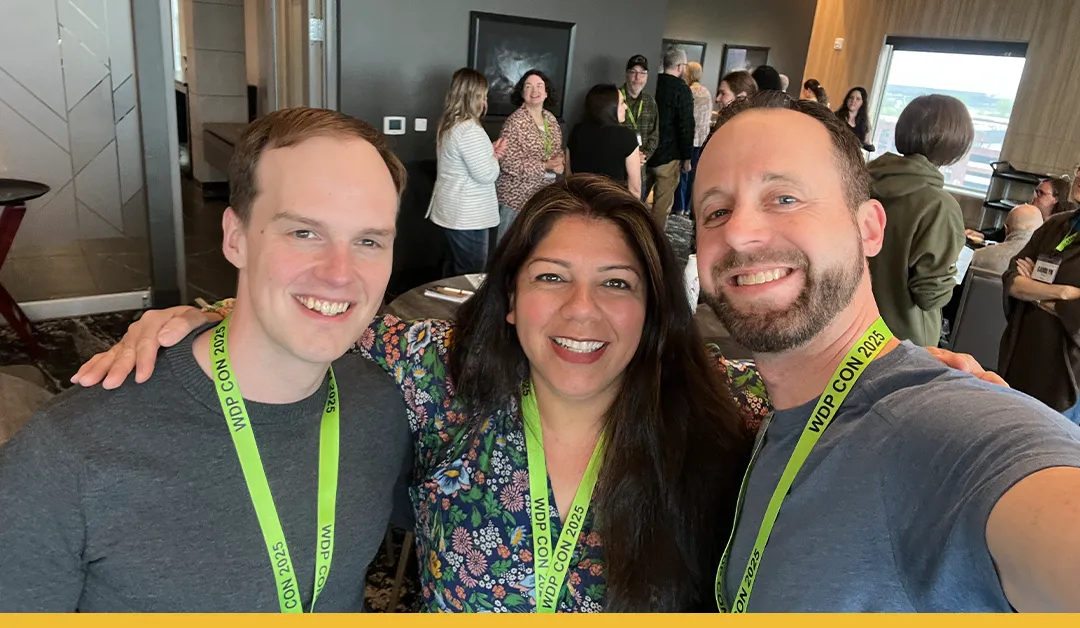
    One of the most meaningful parts of that night was finally meeting Liz (middle in the picture above), my accountability partner from the group. We both come from marketing backgrounds, and she’s now focused on becoming more of a consultant and fractional CMO (or part-time marketing leader). Meeting in person only reinforced how important it is to have someone in your corner who gets it.

    The next day was packed with speaker sessions all focused on business growth. I came away with practical insights I plan to implement, including:

    • Turning your email newsletter into a product your audience actually looks forward to: entertaining, useful, and good enough they might even pay for it.
    • Creating a killer pitch deck that walks clients through every potential objection before they even ask.
    • Structuring offers for long-term clients so you’re building recurring revenue, not just income from one-off projects.

    And yes, I took an absurd number of notes and will absolutely be rewatching the recordings.


    No Cliques, No Competition, Just Connection

    You’d think that gathering 40+ people with nearly identical job titles in one space might feel a little.. competitive. But it was the exact opposite.

    There were no cliques. No posturing. Just genuine conversation and a willingness to share strategies, lessons, and mistakes. Everyone showed up with the intention of helping each other grow. And that got me thinking: why don’t we treat “competitors” this way more often?

    Since starting my business, I’ve realized that even if someone does almost exactly what you do, and lives in your same town, your business is still yours. You bring different experiences, a different network, and a different energy to the table. There’s always a way to differentiate yourself, and you never know when a “competitor” might become a collaborator or mentor.

    I’ve found that getting to know others in your industry, even the ones nearby, can open doors you didn’t expect. Whether it’s sharing referrals, having someone to bounce ideas off, or just knowing you’re not the only one figuring things out, it’s worth it.

    What This Means for Your Business

    This wasn’t just a feel-good weekend. It was a crash course in what matters most in business: people.

    Whether you’re a web designer, a consultant, or a small business owner just trying to grow your brand, your success will hinge on more than just technical skill. It’s about creating genuine experiences, surrounding yourself with a community, and being open enough to share what’s working and learn from others.

    Business growth isn’t a competition. It’s a collaboration.

    And if you’re building a website, launching a brand, or trying to figure out your marketing strategy, that mindset makes all the difference.

    Ready to Build With Purpose?

    Start by getting clear on your goals, your strategy, and what makes your business different. I’d love to help.

    👉 Fill out this short website questionnaire to get started.

    Let’s build something amazing, together.

    What Can Mike Jones Teach You About Marketing?

    What Can Mike Jones Teach You About Marketing?

    What Can a 2000s Rapper Teach You About Marketing? More Than You Think!

    Before I dive in, let’s get one thing straight: I am not endorsing Mike Jones’ music—unless, of course, you enjoy lyrics that make your grandma clutch her pearls. This post is strictly about marketing brilliance, not questionable life choices.

    Ok, let’s talk about Mike Jones. Who? Mike Jones.

    No, not your neighbor. Not your accountant. THE Mike Jones. The Houston rapper who, despite having the lyrical depth of a kiddie pool, somehow made his name unforgettable.

    I mean, I’ve been dating my girlfriend for several years now, and I still don’t know her phone number. But if you ask me right now for Mike Jones’ digits, I’ll drop 281-330-8004 faster than you can say “flip phone.”

    What Made Mike Jones Unforgettable? Repetition.

    Mike Jones had a marketing strategy so simple yet so effective it should be in textbooks. He repeated his name and phone number so many times in his songs that it became impossible to forget.

    It’s the same reason why jingles like “Nationwide is on your side” or “I’m lovin’ it” are burned into your brain forever. Repetition = brand recognition.

    Your Business Needs a “Mike Jones” Moment

    If people don’t remember who you are or what you do, it’s not because they’re dumb—it’s because you haven’t told them enough times.

    Think about it:

      • You post on social media once and expect people to remember your business? Nope.
      • You introduce your brand once and assume clients will call? Think again.
      • You explain your services once and think they get it? Spoiler alert: They don’t.

    In marketing, it takes an average of 8-12 touchpoints before a customer makes a purchase. (And let’s be honest—if Mike Jones had only said his name once, we wouldn’t be having this conversation.)

    How to Be More Like Mike (Marketing Edition)

    1. Repeat Your Core Message

    What do you do? Who do you help? Say it. Then say it again. Then say it when people are sick of hearing it. That’s when they finally start remembering.

    2. Be Easy to Remember

    Mike Jones didn’t go by Michael Q. Jones, CPA—he kept it simple. Your brand messaging should be just as catchy. A memorable tagline, slogan, or value statement goes a long way.

    3. Make It Easy to Find You

    Mike Jones literally gave out his phone number in every song. Are you hiding behind an outdated contact form and a website that loads slower than dial-up. Fix that.

    4. Be Consistent Across Platforms

    Mike Jones didn’t switch it up—same name, same number, every time. If your brand voice sounds different on Instagram, LinkedIn, and your website, you’re confusing people. Keep it consistent.

    5. Show Up More Often Than You Think You Need To

    Mike Jones didn’t just mention his name once per album—he said it in every song. You need to show up regularly in front of your audience through blogs, social media, and email marketing.

    Final Thought: Will People Remember You?

    Mike Jones turned a simple marketing strategy into a lasting legacy (and let’s be honest—he did it without Facebook ads, SEO, or Google Analytics).

    So, here’s the real question: If a 2000s rapper can make millions of people remember his name and phone number, what’s stopping your business from being unforgettable?

    Want to keep your marketing on point? Subscribe to my newsletter (Or just refresh the page and fill out the info in the popup :).
    Need help crafting a brand people won’t forget? Let’s talk.

    Now go forth and channel your inner Mike Jones—minus the questionable lyrics.